Performance evaluation built from the record of work.
The HR platform where continuous feedback guides development and results, while feeding AI-drafted performance reviews.
The problem
Once a year, your leaders reconstruct twelve months of work from memory.
And your people wait just as long to hear how they're doing.
For leaders
Recency wins
The last quarter counts; the first three have faded.
Hours, not insight
Every report written from scratch, against one deadline.
Outcomes nobody can defend
No one can see the evidence behind the rating.
Disconnected from delivery
The evaluation misses what actually shipped that year.
For people
Feedback arrives too late
Once a year, after the work is done.
Development plans on paper
Written at the review, forgotten by spring.
Skills nobody can see
No one knows how colleagues see their skills.
Help nobody counts
Developing others leaves no trace in any evaluation.
The shift
Evaluation should read the record of work, not ask people to recall it.
Nextdot turns the work a team already does — and the conversation around it — into evidence that builds all year. That evidence guides each person's development while the work happens, and drafts the evaluation when the cycle ends. The decision stays with people.
High-performing teams are built by people who develop while doing the work, not at year-end. The evaluation is the record of that development — not a substitute for it.
We call each piece of evidence a dot
Work worth talking about — time-bound, owned by whoever's doing it, open for conversation while it happens. Each dot feeds two things at once: how the person is developing now, and the evaluation drafted later.
How it works
Six steps, and the loop feeds itself.
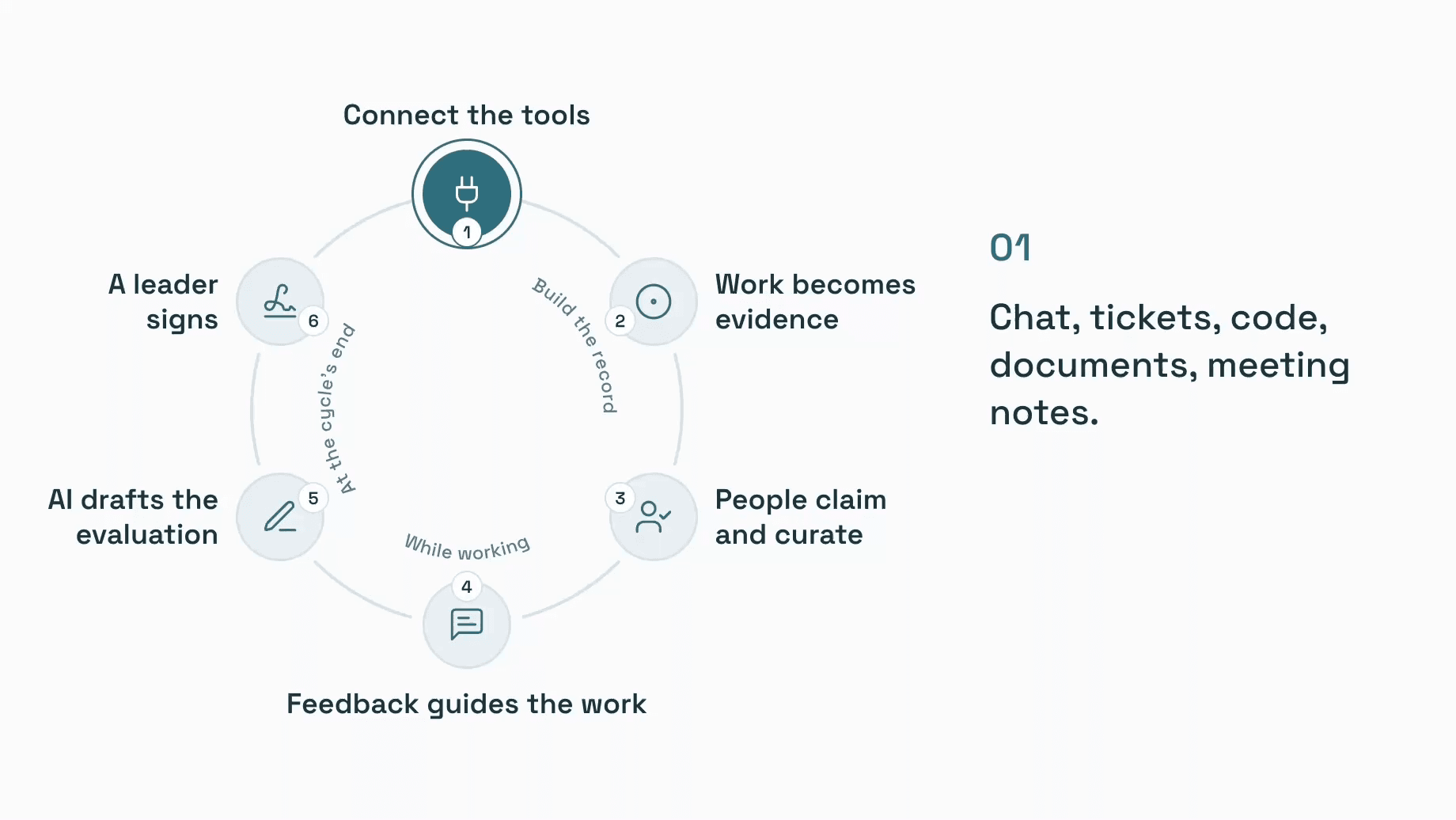
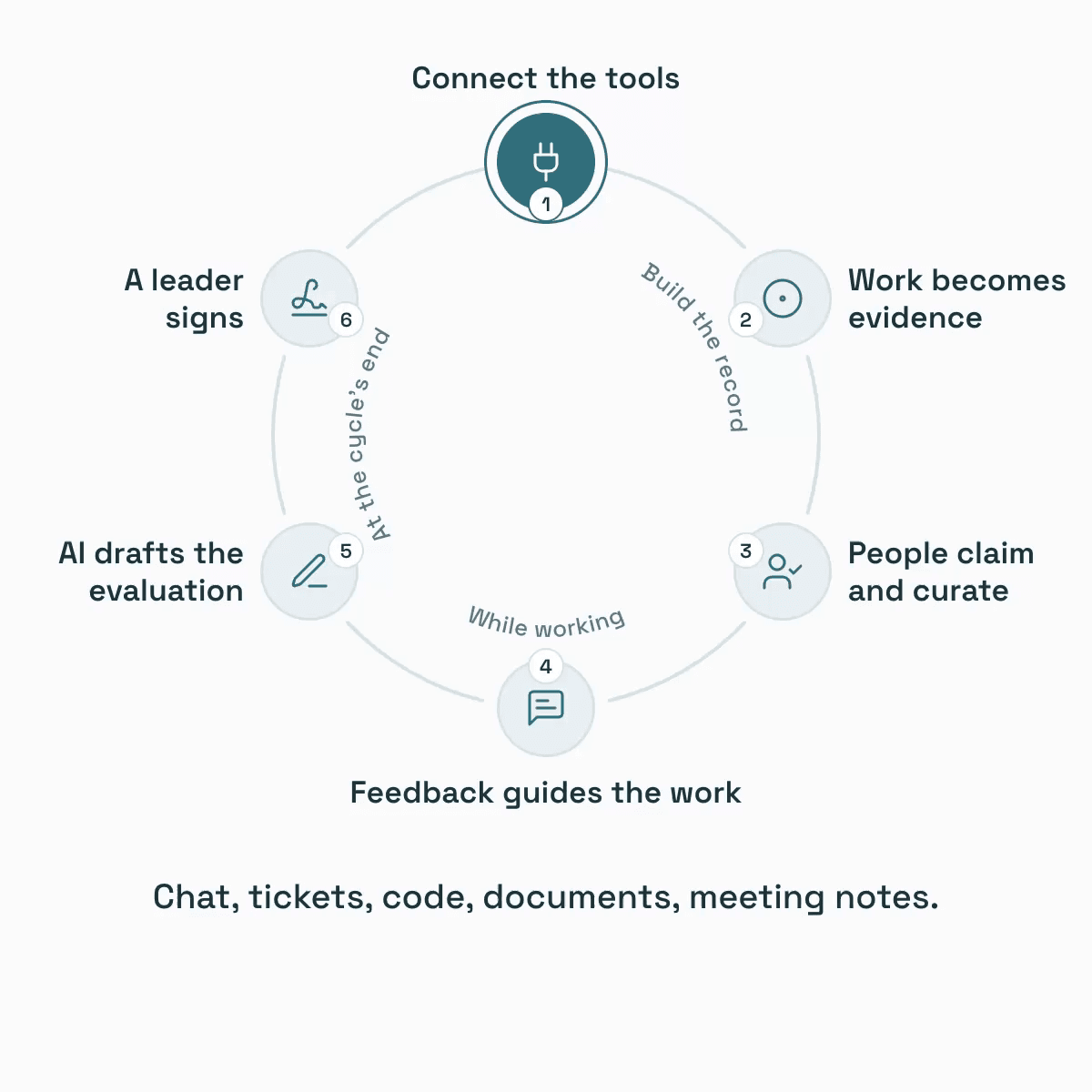
- Connect the tools — Chat, tickets, code, documents, meeting notes.
- Work becomes evidence — Work items and the discussion around them become dots.
- People claim and curate — Each person keeps what's theirs and removes what isn't.
- Feedback guides the work — Given in Nextdot or in the tools, while the work happens. Each person sees how they're developing as they go.
- AI drafts the evaluation — Pre-filled per dimension of your own framework.
- A leader signs — Or writes their own. Nothing is final until signed.
The next cycle begins with a year of evidence already on record.
The import
Start from what already exists.
- 01
Connect the tools your teams already use. Twelve months of work come in on day one.
- 02
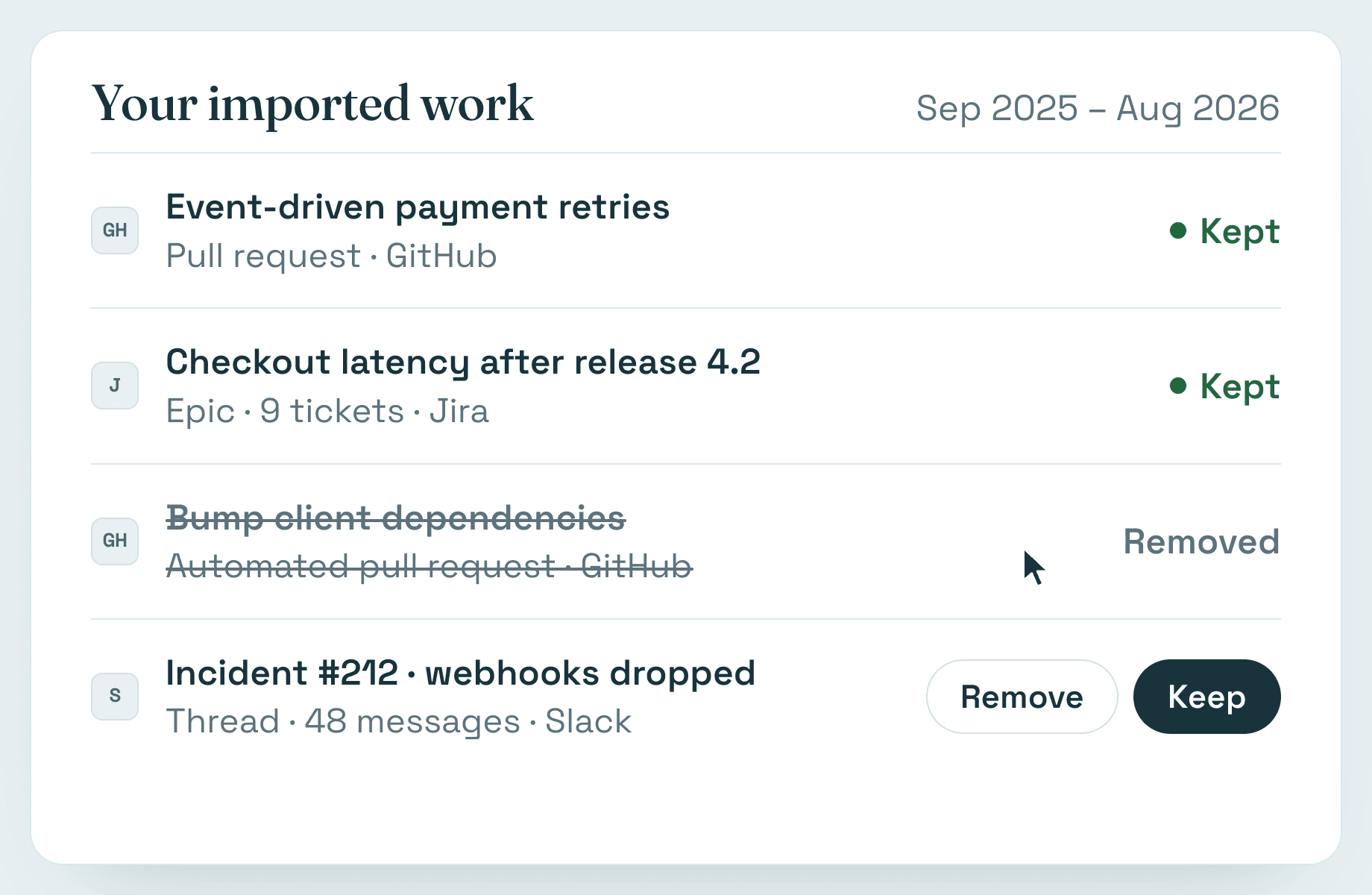
Work items and the discussion around them arrive as dots — anonymous until the person they belong to claims them.
- 03
Each person keeps or removes what's theirs. Only what they keep counts.
Chat
- Microsoft Teams
- Slack
- Google Chat
- Mattermost
- Webex
- Discord
- Gmail
- Outlook
Tickets & work management
- Jira
- Jira Data Center
- Linear
- Asana
- ClickUp
- Monday
- Trello
- Basecamp
- Shortcut
- Pivotal Tracker
- Wrike
- Teamwork
- Smartsheet
- Adobe Workfront
- Microsoft Planner
- Productboard
Code & delivery
- GitHub
- GitLab
- Bitbucket
- Azure DevOps
- Gerrit
Documents & knowledge
- Google Drive
- Google Docs
- Google Sheets
- Google Slides
- OneDrive for Business
- SharePoint Online
- Microsoft Word
- Microsoft Excel
- Microsoft PowerPoint
- OneNote
- Confluence
- Confluence Data Center
- Notion
- Coda
- Slab
- Outline
- Dropbox
- Box
Meetings & recordings
- Zoom
- Google Meet
- Fathom
- Fireflies
- Grain
- Gong
- Read.ai
- tl;dv
- Granola
- Avoma
- Fellow
- Circleback
Design & whiteboards
- Figma
- FigJam
- Miro
- Mural
Customer conversations
- Zendesk
- Intercom
- Freshdesk
- Front
- Help Scout
- Zoho Desk
Sales work
- HubSpot
- Salesforce
- Pipedrive
- Attio
- Close
- Zoho CRM
- Microsoft Dynamics 365
Incidents & operations
- PagerDuty
- Incident.io
- Rootly
- ServiceNow
The evaluation
AI-drafted, human-signed.
- 01
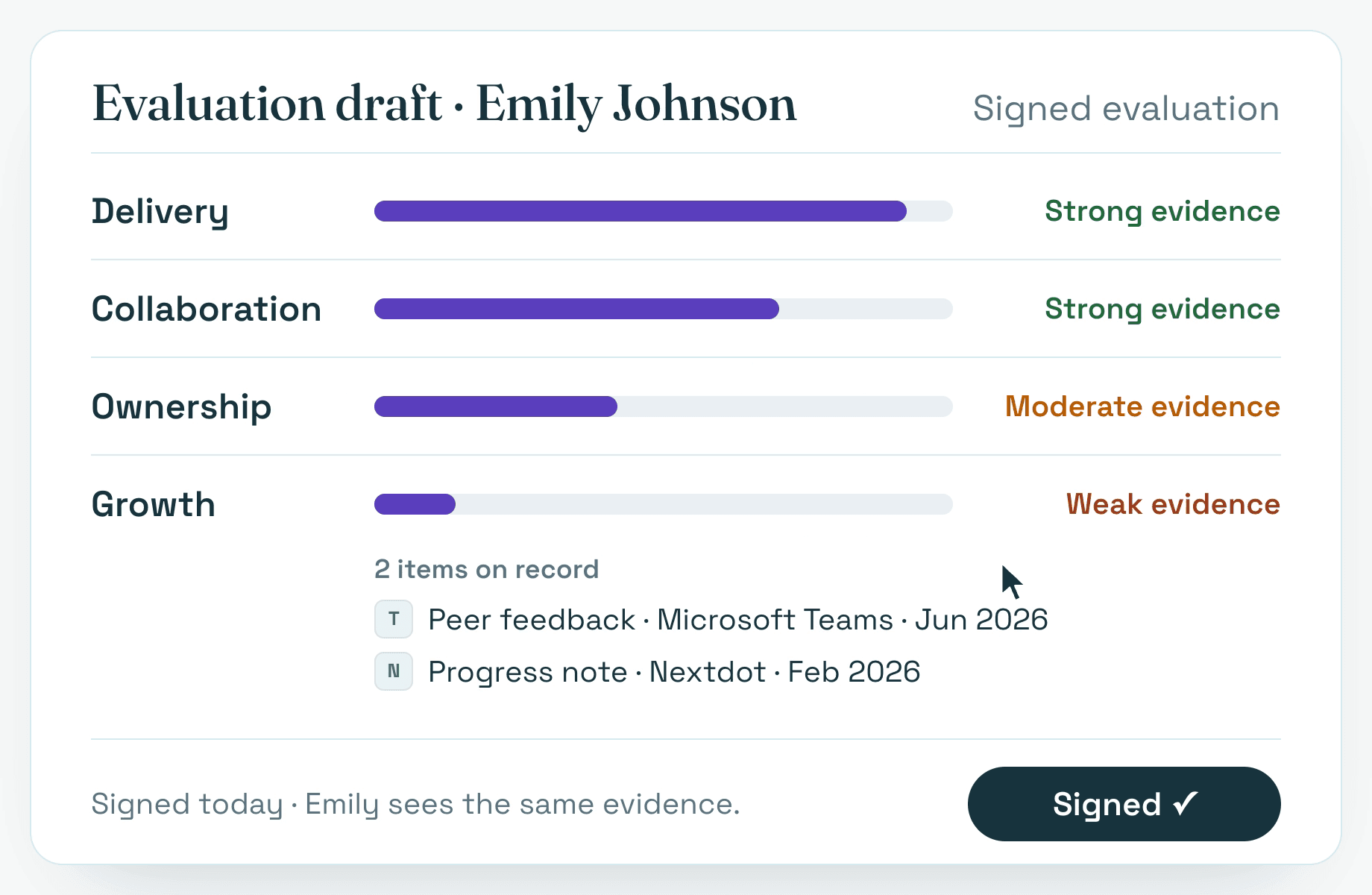
The draft is pre-filled per dimension of your own performance framework, from the evidence on record.
- 02
Every dimension shows how much evidence stands behind it, so a leader knows where to look before signing.
- 03
A leader signs the draft as their own — or writes their own evaluation instead.
- 04
The person sees the same evidence their leader sees.
Development
Development that doesn't wait for the review.
- 01
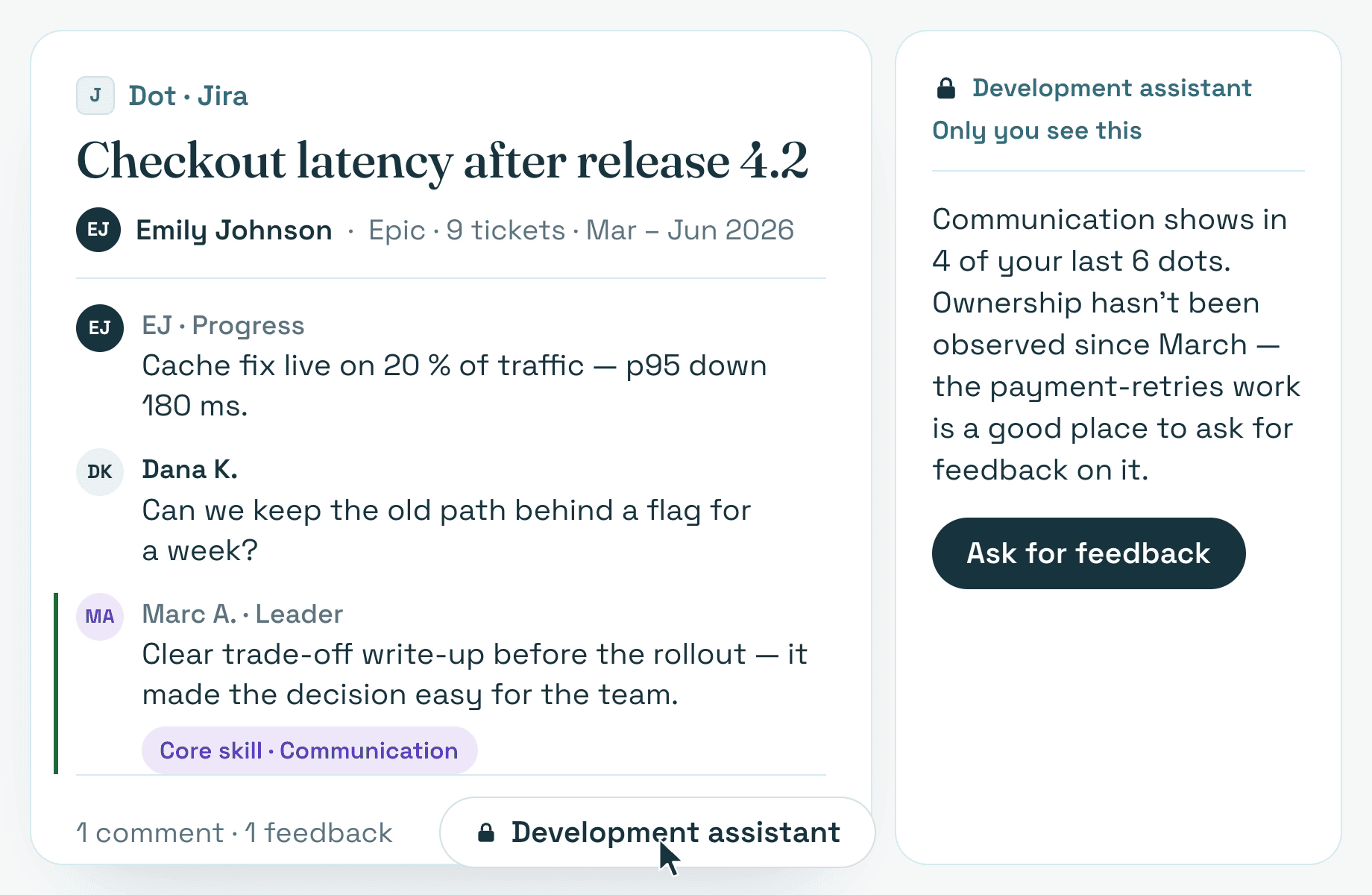
A dot is something you're doing that's worth talking about — and it shows how you're growing, while it happens.
- 02
Feedback lands on the dot while the work moves — from colleagues and leaders, in Nextdot or in the tools — not months later.
- 03
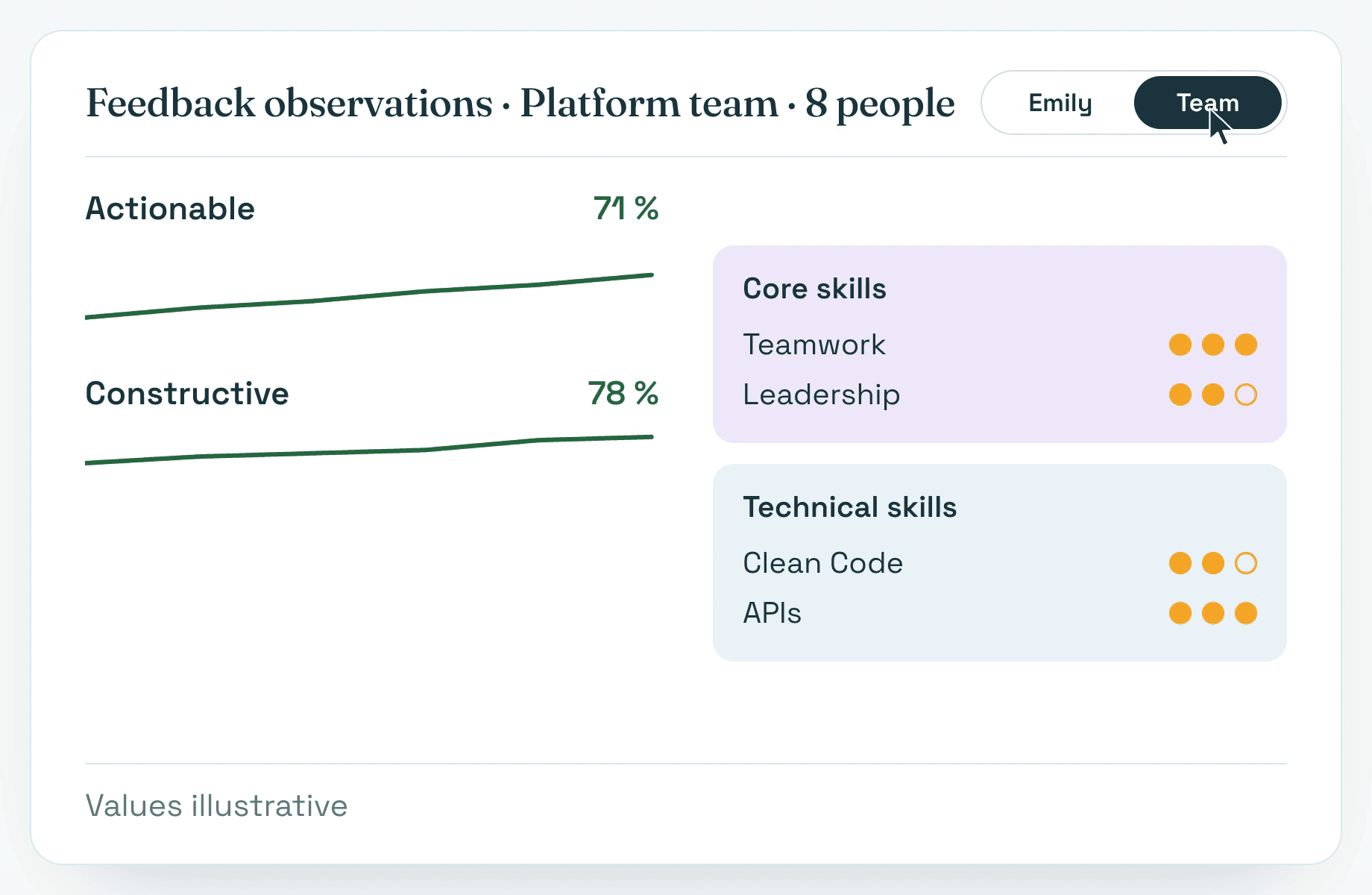
Your Feedback Observations show how colleagues see your core and technical skills, and how your own feedback helps others. Updated all year.
- 04
1:1 check-ins and a private development assistant help you structure your own development from that evidence. No one else sees the assistant conversations.
Performance and development
One record, two outcomes.
For the organization
A continuous, AI-drafted evaluation signed by a leader, with goals (OKRs) as a second measure of performance.
For the person
How colleagues see their core and technical skills, and how their own feedback helps others — updated all year through their Feedback Observations report, 1:1 check-ins and a private development assistant.
For leadership
Feedback quality — actionable and constructive — is measured for everyone. Leadership sees who contributes most to others' development, by team and role, and how that changes over time; high contributors gain evidence for a leadership path.
Control
People decide.
- Nothing is final without a signature.
- AI drafts. A leader signs the draft as their own, or writes their own evaluation instead. Either way, a person decides.
- People curate their own evidence.
- What appears in an evaluation is what the person chose to keep. Nothing is attached to them without their say.
- Assistant conversations stay private.
- The development assistant belongs to the person. No one else in the organization sees those conversations.
At scale
Ready for a large organization.
Roles at every level
Organization and team administration, with reporting lines defined once and respected on every screen.
Your own framework
Core skills and evaluation dimensions from your performance framework; technical skills per job role, maintained by your own people.
Import once, then continuous
After the first import, new work keeps arriving as evidence and people are prompted to keep or remove it.
Guided setup
We set it up with you: connecting the tools, defining the framework, running the first cycle.
Pricing
For teams that want to start today. Larger organization? Speak to sales for guided setup and pricing.
€8
per user / month, billed annually
- Unlimited dots and feedback
- Work-history import from your tools
- AI-drafted evaluations, signed by a leader
- Your own performance framework; technical skills per job role
- Feedback Observations report
- 1:1 check-ins and a private development assistant
- Goals (OKRs)
- Integrations: Microsoft Teams, Slack, Jira, GitHub and more
- ISO 27001 certified · Built to meet GDPR requirements
- Basic SLA support
The easiest way to judge it is on your own data.
Happy to show it running on one team's tools — twelve months of work, your framework, your people.